By Nick
I bought this Snow White set complete at our local flea market this Sunday.
I'd never seen it before, and when I asked what the person selling it wanted, and he said $10, I was somewhat shocked.
I didn't even look at who made the figures, and didn't examine each one for any possible flaws.
The gentleman selling them wrapped each figure individually, and handed me the bag.
When I got home, I set out the display it came with.
I placed each figure out on it's designated spot.
It was then I noticed a couple figures were indeed not perfect, such as Happy, who I assume is supposed to be holding a conductor's baton, which is clearly broken...
...and Dopey's drumstick has seen better days.
It seems everyone else is in pretty good condition.
The Dwarfs average 3.25" in height, while Snow White is 5.5."
When it came to investigating where these figures came from, I looked on the bottom, and then went to what I consider the best place on the internet to find out information on Snow White, Filmic Light.
This set was sold at CVS in 2002 to celebrate Snow White's 65th anniversary. The display came with Snow White.
I think $10 was a very fair price, despite the small flaws, and I consider this another excellent Flea Market Find!'
Showing posts with label Snow White and the Seven Dwarfs. Show all posts
Tuesday, May 12, 2015
Friday, December 5, 2014
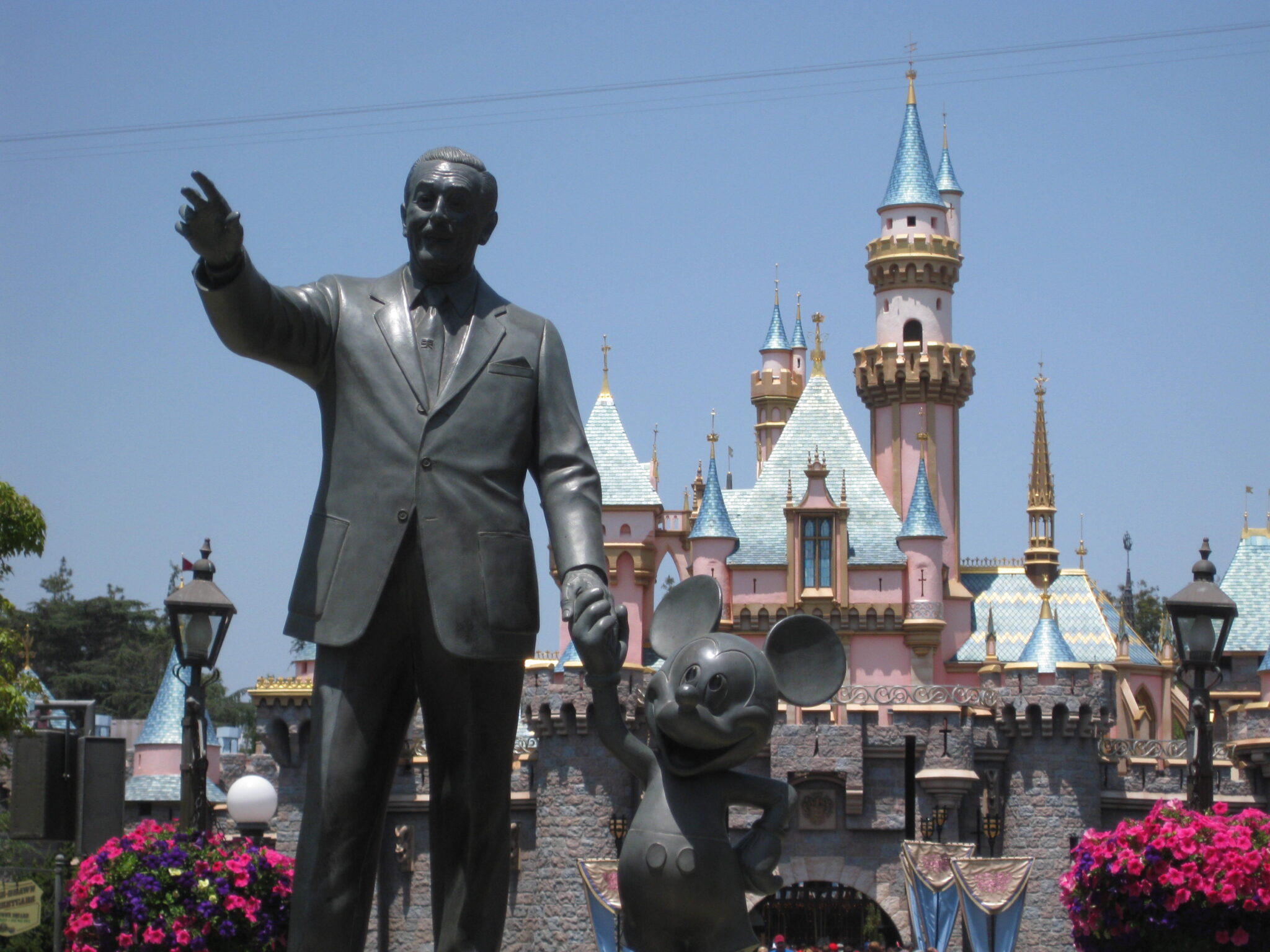
A Look at the Man: Walter Elias Disney

By: Jacqueline aka Jersey Diva
Walter
Elias Disney was born on 5th December 1901 to Elias Disney (an
Irish-Canadian) and Flora Call Disney ( a German-American) in the
Hermosa community of Chicago. He was one of five children, four boys and
a girl. Shortly after his birth, the Disney family moved to Marceline
where Walt spent most of his childhood. Walt's early interest in art
and drawing had him selling small sketches that he used to do in his
spare time. Many of his activities revolved around some sort of art. He
attended McKinley High School where he contributed his drawings to the
school newspaper. In an effort to refine his art skills, Walt joined
evening classes in the Academy of Arts.
In
1911, the Disney family moved to Kansas City, where Walt developed a
love for trains. Walt would later work a summer job with the railroad
where his uncle, Mike Martin, was a train engineer. Walt worked selling
snacks and newspapers to travelers.
"I don't believe in talking down to children. I don't
believe in talking down to any certain segment. I like to kind of just
talk in a general way to the audience. Children are always reaching." - Walt Disney
Walt
dropped out of high school at the age of 16 to join the army, but was
rejected for being underage. Instead, he joined the Red Cross and was
sent to France for a year to drive an ambulance.
Rather than covering the ambulance with stock camouflage, he covered it with cartoons!
In
1919, Walt returned to Kansas City to pursue a career as a newspaper
artist. With help from his brother, Roy, Walt got a job at the
Pesmen-Rubin Art Studio. While there, he met cartoonist Ubbe Iwerks.
From there, Walt went to work at the Kansas City Film Ad Company, where
he would make commercials based on cutout animation. It was around
this time when Walt began experimenting with a camera, doing hand-drawn
animation, and he decided to open his own animation business. He
recruited his first employee, Fred Harman, from the ad company.
Walt and Harman made a deal with a local Kansas City theater to screen their cartoons, Laugh-O-Grams.
These cartoons were so popular, Walt was able to acquire his own
studio which he named, Laugh-O-Gram. After hiring a number of
employees, which included Harman's brother and Ubbe Iwerks, they did a
series of seven minute fairy tales that combined live action and
animation. They called them Alice in Cartoonland. Unfortunately, by 1923, the studio had accumulated so much debt they were forced to declare bankruptcy.
“Money doesn't excite me–my ideas excite me.” - Walt Disney
Walt and his brother, Roy, soon saved enough money to move to Hollywood.
Iwerks also relocated to California. The Disney Brothers' Studio was
born. Their first deal was with New York distributor, Margaret Winkler.
Winkler distributed their Alice cartoons. At this time, they also invented Oswald the Lucky Rabbit and contracted the shorts for $1,500 each.
In
1925, Walt hired Lillian Bound, an ink-and-paint artist, whom he
married after a brief courtship. Walt and Lillian's first attempt at
pregnancy ended in miscarriage. Lillian became pregnant again and gave
birth to a daughter, Diane Marie Disney on December 18, 1933. Three
years later, the Disney's adopted Sharon Mae Disney.
In
1927, Walt discovered that Winkler and her husband, Charles Mintz, had
stolen the rights to Oswald. Iwerks was the only animator who refused
to leave Disney. The Disney brothers, their wives and Iwerks immediately
produced three cartoons featuring a new character, Mickey Mouse. Their
first animated shorts featuring Mickey were silent films, Plane Crazy and The Gallopin' Gaucho,
for which they were unable to find distribution. When sound found it's
way into film, Walt created a third short which was equipped with sound
and music called Steamboat Willie. Walt voiced Mickey, and the cartoon was an instant hit.
"I love Mickey Mouse more than any woman I have ever known." - Walt Disney
In 1929, Walt introduced Mickey Mouse's friends: Minnie Mouse, Goofy,
Pluto and Donald Duck. Walt's journey to fame got even better in 1932
when he won his first Academy Award. Snow White and the Seven Dwarfs, Walt's
first full length animated movie, came out in December 1937. It cost
$1,499,000 to produce, an unimaginable amount amidst the Depression.
Over the next five years, Walt Disney Studios released more full length
feature films, including Pinocchio, Dumbo, Fantasia and Bambi. The
50's brought more animated features including Cinderella, Alice in
Wonderland, Peter Pan, Sleeping Beauty and 101 Dalmatians. Walt was
first to use TV for entertainment purposes and his shows, Mickey Mouse
Club, Zorro and Davy Crockett were extremely popular.
“For years afterward, I hated Snow White because every time I'd make
a feature after that, they'd always compare it with Snow White, and it
wasn't as good as Snow White.” - Walt Disney
Walt had always dreamed of starting a theme park where children could
enjoy with their families, take fun rides and see their favorite Disney
characters. His dream became a reality in 1955 when Disneyland Park
opened and began entertaining worldwide tourists. Within a few years of
the opening, Disney began plans for another theme park and Experimental
Prototype Community of Tomorrow (EPCOT) in Florida. In 1966, while the
park was still under construction, Disney was diagnosed with lung
cancer. He passed away on December 15, 1966 at the age of 65. Walt was
cremated and his ashes were interred at Forest Lawn Cemetery in
California.
“Disneyland is dedicated to the ideals, the dreams and the hard
facts that have created America...with the hope that it will be a source
of joy and inspiration to the world.” - Walt Disney
After Walt died, Roy carried on the plans to finish the Florida theme
park, which opened in 1971 under the name Walt Disney World.
“All our dreams can come true — if we have the courage to pursue them.” - Walt Disney
Don't be afraid to follow your dreams!
~Jersey Diva
This article was originally posted on the Tips From the Disney Divas and Devos Blog, where Jersey Diva is a contributing writer.
Wednesday, November 12, 2014
Wordless Wednesday: The Festival of Fantasy Parade
Tuesday, September 30, 2014
Give Me More Music, Music Music...
By Beth Skarp
If I were to ask you to name just ONE Disney song to start singing right now, what popular or perhaps not so popular song would you start singing and possibly dancing to?
My song of choice was Let's Go Fly a Kite” from “Mary Poppins”, but chances are you may or may not have been thinking of “Let It Go” from “Frozen."
What makes for a great Disney movie? Is it the story line, the animation, or the music?
I am beginning to think that perhaps the music is what makes the movie.
I wanted to know which Disney movie holds the title to date for having the most music associated with it. Without doing an online search, can you name which movie, a Disney classic, holds this title? I had no idea until I looked online and discovered the movie was “Alice in Wonderland”. Now here is a real test of a Disney lover...name a song from this movie!
Did you think of an “Alice in Wonderland” song? Chances are, you came up with “The UnBirthday Song” , “I'm Late” or the opening theme song of “Alice in Wonderland”. Those were the only songs I could recall when thinking about the film.
In all, thirty two songs were originally composed for “Alice in Wonderland”, but only twenty songs made the cut for the official movie soundtrack. Why do you suppose Walt Disney himself went to such great lengths to compose so many songs of such a wide variety for a single movie?
The answer is quite simple actually. When Reverend Charles Dogdson, who used the pen name of Lewis Carroll (the author we know of for writing “Alice in Wonderland”) wrote these stories, they were intended to be read as short little snippets or bed time stories. Carroll had a vivid imagination and created many characters within his various stories. Many of the characters that Carroll created did not readily lend themselves from one story line to the next. Simply stated, there was no real continuity to Carroll's stories in his books. This posed a bit of a problem for Walt and his production team, since the works of Carroll were so unlike other well known author that Walt used as template of sorts for this earlier movies such as “Snow White."
Walt presented the works of Lewis Carroll to his animators and writers, sharing his ideas for the possibility of a making a feature film. Using a bit of musical as well as animated whimsy, the story line was able to segue from one thought to another without the fear of being too disjointed or choppy.
Walt had a great pool of musicians from which he could draw for musical talent. Bob Hilliard & Sammy Fain collaborated on the scores to two early 1950’s Walt Disney animated features. Fain was the composer while Hilliard tended to be the lyricist. Another talented composer, Sammy Cahn, teamed up with Bob Hilliard & Sammy Fain for the music to "Your Mother and Mine" and "Second Star to the Right." While these songs were nicely composed and had memorable lyrics, they did not flow with the story line for “Alice in Wonderland.”
“Peter Pan” was in production during the same time “Alice in Wonderland” was also in production. Not wanting to waste great talent or good music, the songs of "Your Mother and Mine" and "Second Star to the Right" were recycled into Peter Pan with more memorable results.
In fact, “Beyond the Laughing Sky” was the song originally suggested for Alice to sing during the opening scenes of the movie. Instead, the theme song, or the song we hear Alice singing in the very beginning of the movies became instead “In a World of My Own."
As one reads the twenty songs listed as the official soundtrack for the movie, it is a little bit easy to wonder if in fact you actually heard the various musical numbers or not. Some of the songs are a mere jingle of only a few seconds. The ones you actually remember are catchy tunes that you remember for the music as well as the sometimes silly words.
The film soundtrack was first released on vinyl record back on July 28, 1951. I may be one of the few who actually still has a copy of this record someplace in our collection. The song titles for the record included the following titles:
“Alice in Wonderland”--sung by the Jud Conlon Chorus and the Mellomen
“In a World of My Own”--sung by Alice
“I'm Late"—sung by the White Rabbit
“The Sailor's Hornpipe”--sung by the Dodo
“The Caucus Race”--sung by the Dodo and Animals
“How Do You Do”--sung by Tweedledee and Tweedledum
“Shake Hands”--sung by Tweedledee and Tweedledum
“The Walrus and the Carpenter”--sung by Tweedledee and Tweedledum
“Old Father William”--sung by Tweedledee and Tweedledum
“Smoke the Blighter Out”--sung by the Dodo and the White Rabbit
“All in the Golden Afternoon”--sung by The Flowers and Alice
“A-E-I-O-U”--sung by the Caterpillar
“Twas Brillig”--sung by the Cheshire Cat
“The UnBirthday Song”--sung by the Mad Hater, March Hare, and Alice
“Very Good Advice”--sung by Alice
“Painting the Roses Red”--performed by the Playing Cards but sung by the Mellomen and Alice
“Who's Been Painting My Roses Red?” (Reprise)--sung by The Queen of Hearts and the Playing Cards (Mellomen)
“The UnBirthday Song”--sung by the Mad Hatter, March Hare, The Queen of Hearts, and the Playing Cards (Mellomen)
“The Caucus Race” (Reprise)--sung by The Entire Cast minus Alice
“Alice in Wonderland” (Reprise)--sung by the Jud Conlon Chorus and the Mellomen
If you wish to count them, you will find that exactly twenty titles appear on the official listing for the soundtrack.
After doing a bit of research, I did manage to find the listing of the songs written for the film but not used for one reason or another. For your enjoyment, here is that listing:
“Beyond the Laughing Sky”. This was replaced with “In a World of My Own”--sung by Alice. “Beyond the Laughing Sky” was later turned into “The Second Star to the Right” and is a featured song in “Peter Pan.”
“Dream Caravan”--sung by The Caterpillar. This song was replaced by “A-E-I-O-U”
“I'm Odd”--sung by the Cheshire Cat. This song was replaced with “Twas Brillig”
“Beware the Jabberwock—sung by Stan Freberg, Daws Butler and the Rhythmaires. Since the character of the Jabberwock was deleted from the film, the song was deleted as well.
“So They Say”--sung by Alice
“If You'll Believe in Me”--sung by the Lion and the Unicorn which were deleted characters.
“Beautiful Soup”--sung by the Mock Turtle and the Gryphon. This song was set to the tune of “Blue Danube” and had already been used by the Walt Disney Company in two cartoons recently released at the time (Jungle Rhythm and Night). The character and the song was removed from this film.
“Everything Has A Useness—meant for the Caterpillar to sing to Alice while attempting to explain the usefulness of everything, or in this case the use of the mushroom.
“Curiosity”--no one seems to know why this song was written or why it was deleted
“Humpty Dumpty”
“Speak Roughly To Your Little Boy”--this was from the original works of Lewis Carroll depicting a grotesque character from one of the stories. Walt felt the music and the character may be too inappropriate for young children, including his own daughters Sharon and Diane Disney. Because of this, both the character and music was deleted
“Will You Join The Dance”
If you were counting, you will notice that an even dozen or 12 songs were written that were not used for “Alice in Wonderland”. This brought the total number of songs composed to thirty two.
One of biggest criticisms for “Alice in Wonderland” was that it was in essence a series of short cartoons or story sketches loosely pieced together. Walt himself felt he had let his audiences down, that this was a feature that truly had no heart to it. Walt was not a huge fan of this particular movie, and almost didn't release the film for theaters.
However, movie goers tended to love the characters and the whimsical music associated with “Alice in Wonderland”. This fact alone is probably what has helped keep “Alice in Wonderland” a beloved Disney Classic.
If I were to ask you to name just ONE Disney song to start singing right now, what popular or perhaps not so popular song would you start singing and possibly dancing to?
My song of choice was Let's Go Fly a Kite” from “Mary Poppins”, but chances are you may or may not have been thinking of “Let It Go” from “Frozen."
What makes for a great Disney movie? Is it the story line, the animation, or the music?
I am beginning to think that perhaps the music is what makes the movie.
I wanted to know which Disney movie holds the title to date for having the most music associated with it. Without doing an online search, can you name which movie, a Disney classic, holds this title? I had no idea until I looked online and discovered the movie was “Alice in Wonderland”. Now here is a real test of a Disney lover...name a song from this movie!
Did you think of an “Alice in Wonderland” song? Chances are, you came up with “The UnBirthday Song” , “I'm Late” or the opening theme song of “Alice in Wonderland”. Those were the only songs I could recall when thinking about the film.
In all, thirty two songs were originally composed for “Alice in Wonderland”, but only twenty songs made the cut for the official movie soundtrack. Why do you suppose Walt Disney himself went to such great lengths to compose so many songs of such a wide variety for a single movie?
The answer is quite simple actually. When Reverend Charles Dogdson, who used the pen name of Lewis Carroll (the author we know of for writing “Alice in Wonderland”) wrote these stories, they were intended to be read as short little snippets or bed time stories. Carroll had a vivid imagination and created many characters within his various stories. Many of the characters that Carroll created did not readily lend themselves from one story line to the next. Simply stated, there was no real continuity to Carroll's stories in his books. This posed a bit of a problem for Walt and his production team, since the works of Carroll were so unlike other well known author that Walt used as template of sorts for this earlier movies such as “Snow White."
Walt presented the works of Lewis Carroll to his animators and writers, sharing his ideas for the possibility of a making a feature film. Using a bit of musical as well as animated whimsy, the story line was able to segue from one thought to another without the fear of being too disjointed or choppy.
Walt had a great pool of musicians from which he could draw for musical talent. Bob Hilliard & Sammy Fain collaborated on the scores to two early 1950’s Walt Disney animated features. Fain was the composer while Hilliard tended to be the lyricist. Another talented composer, Sammy Cahn, teamed up with Bob Hilliard & Sammy Fain for the music to "Your Mother and Mine" and "Second Star to the Right." While these songs were nicely composed and had memorable lyrics, they did not flow with the story line for “Alice in Wonderland.”
“Peter Pan” was in production during the same time “Alice in Wonderland” was also in production. Not wanting to waste great talent or good music, the songs of "Your Mother and Mine" and "Second Star to the Right" were recycled into Peter Pan with more memorable results.
In fact, “Beyond the Laughing Sky” was the song originally suggested for Alice to sing during the opening scenes of the movie. Instead, the theme song, or the song we hear Alice singing in the very beginning of the movies became instead “In a World of My Own."
As one reads the twenty songs listed as the official soundtrack for the movie, it is a little bit easy to wonder if in fact you actually heard the various musical numbers or not. Some of the songs are a mere jingle of only a few seconds. The ones you actually remember are catchy tunes that you remember for the music as well as the sometimes silly words.
The film soundtrack was first released on vinyl record back on July 28, 1951. I may be one of the few who actually still has a copy of this record someplace in our collection. The song titles for the record included the following titles:
“Alice in Wonderland”--sung by the Jud Conlon Chorus and the Mellomen
“In a World of My Own”--sung by Alice
“I'm Late"—sung by the White Rabbit
“The Sailor's Hornpipe”--sung by the Dodo
“The Caucus Race”--sung by the Dodo and Animals
“How Do You Do”--sung by Tweedledee and Tweedledum
“Shake Hands”--sung by Tweedledee and Tweedledum
“The Walrus and the Carpenter”--sung by Tweedledee and Tweedledum
“Old Father William”--sung by Tweedledee and Tweedledum
“Smoke the Blighter Out”--sung by the Dodo and the White Rabbit
“All in the Golden Afternoon”--sung by The Flowers and Alice
“A-E-I-O-U”--sung by the Caterpillar
“Twas Brillig”--sung by the Cheshire Cat
“The UnBirthday Song”--sung by the Mad Hater, March Hare, and Alice
“Very Good Advice”--sung by Alice
“Painting the Roses Red”--performed by the Playing Cards but sung by the Mellomen and Alice
“Who's Been Painting My Roses Red?” (Reprise)--sung by The Queen of Hearts and the Playing Cards (Mellomen)
“The UnBirthday Song”--sung by the Mad Hatter, March Hare, The Queen of Hearts, and the Playing Cards (Mellomen)
“The Caucus Race” (Reprise)--sung by The Entire Cast minus Alice
“Alice in Wonderland” (Reprise)--sung by the Jud Conlon Chorus and the Mellomen
If you wish to count them, you will find that exactly twenty titles appear on the official listing for the soundtrack.
After doing a bit of research, I did manage to find the listing of the songs written for the film but not used for one reason or another. For your enjoyment, here is that listing:
“Beyond the Laughing Sky”. This was replaced with “In a World of My Own”--sung by Alice. “Beyond the Laughing Sky” was later turned into “The Second Star to the Right” and is a featured song in “Peter Pan.”
“Dream Caravan”--sung by The Caterpillar. This song was replaced by “A-E-I-O-U”
“I'm Odd”--sung by the Cheshire Cat. This song was replaced with “Twas Brillig”
“Beware the Jabberwock—sung by Stan Freberg, Daws Butler and the Rhythmaires. Since the character of the Jabberwock was deleted from the film, the song was deleted as well.
“So They Say”--sung by Alice
“If You'll Believe in Me”--sung by the Lion and the Unicorn which were deleted characters.
“Beautiful Soup”--sung by the Mock Turtle and the Gryphon. This song was set to the tune of “Blue Danube” and had already been used by the Walt Disney Company in two cartoons recently released at the time (Jungle Rhythm and Night). The character and the song was removed from this film.
“Everything Has A Useness—meant for the Caterpillar to sing to Alice while attempting to explain the usefulness of everything, or in this case the use of the mushroom.
“Curiosity”--no one seems to know why this song was written or why it was deleted
“Humpty Dumpty”
“Speak Roughly To Your Little Boy”--this was from the original works of Lewis Carroll depicting a grotesque character from one of the stories. Walt felt the music and the character may be too inappropriate for young children, including his own daughters Sharon and Diane Disney. Because of this, both the character and music was deleted
“Will You Join The Dance”
If you were counting, you will notice that an even dozen or 12 songs were written that were not used for “Alice in Wonderland”. This brought the total number of songs composed to thirty two.
One of biggest criticisms for “Alice in Wonderland” was that it was in essence a series of short cartoons or story sketches loosely pieced together. Walt himself felt he had let his audiences down, that this was a feature that truly had no heart to it. Walt was not a huge fan of this particular movie, and almost didn't release the film for theaters.
However, movie goers tended to love the characters and the whimsical music associated with “Alice in Wonderland”. This fact alone is probably what has helped keep “Alice in Wonderland” a beloved Disney Classic.
Subscribe to:
Posts (Atom)